
Are you a sketchbook person or a loose pages person when it comes to your art practice? I saw an art friend of mine on Instagram say how she disliked sketchbooks as if she did a drawing she was really pleased with, it was forever entombed in a book, and if the drawing went over the central fold, it’s impossible to straighten it out, artistically speaking. Having loose pages meant if you like what you’d drawn, you could immediately stick it up or even frame it, and there aren’t those pesky staples or stitches to navigate.
I thought this was an interesting take, as I have always found gummed pads or single sheets really unappealing and chaotic, and particularly in the last few years, my sketchbooks have become a really important part of my work as an illustrator and designer. As my regular readers will know, I love a Leuchtturm sketchbook these days. The Fabriano Venezia are super pretty but I find the textured paper a weird combination of too thick and clumpy for graphite and ink but not properly absorbent enough for wet media. Moleskine sketchbooks have beautiful creamy-white paper but the sketchbooks only come with black covers, and I definitely need colour in order to bond with my sketchbook when I move from one to another. I can’t bear spiral bound or saddle stitched (stapled) so it’s a proper sewn spine for me. I keep all my sketchbooks and love having a library to look back through.
I wonder if the loose leaf/sketchbook depends on the artwork you do? Natalie illustrates comics and sells her designs, so I should think being able to have ideas and works in progress pinned up in front of you is really helpful, and in a sketchbook perhaps they feel locked away. My sketchbooks are a place to play and get “other stuff” out of my system so that when I need to do artwork for sale or illustrations for the birdwatching logbooks I can see that more as work. Therefore my sketchbooks become a lovely set of memories of my trials, tribulations, interests and obsessions. I am also much better at remembering things with a context rather than a date, so for example if I want to find, say, my dinosaur sketches, I can remember they were in the same sketchbook as the coral coloured pencil drawing.
I have always liked a square format but have recently moved to a larger, portrait format so I have more room to move, and I’m really enjoying being able to fit lots of sketches on a page. I have never been able to work in small (below A5) sketchbooks although I went through a phase years ago when I had a tiny A7 sketchbook which I kept in my bag and I used to draw round a credit card as a frame. Those were more patterns and abstract designs…I can’t actually draw anything that small.
Of course the joy of having an A4(ish) sketchbook is that when opened flat it becomes A3. Back to a previous point about the seam and fold, I personally love to see a drawing span more than one page and incorporating the binding. I am a process artist though, and so for me this represents the artist being so absorbed in what they’re drawing or so unperturbed about fitting their sketch into a designated space that they just don’t care. I have written before about sketchbooks being more like a portfolio for many artists, each spread being a finished picture, but for me this is the opposite of what I want from my sketchbook. As for the centre binding, I have done a few things where I needed to fix the messy bit caused by the thread but because my art is quite loose and gestural, I can fix this with a bit of fudging in Photoshop. Behold, my slow worm/slow-worm/slowworm:
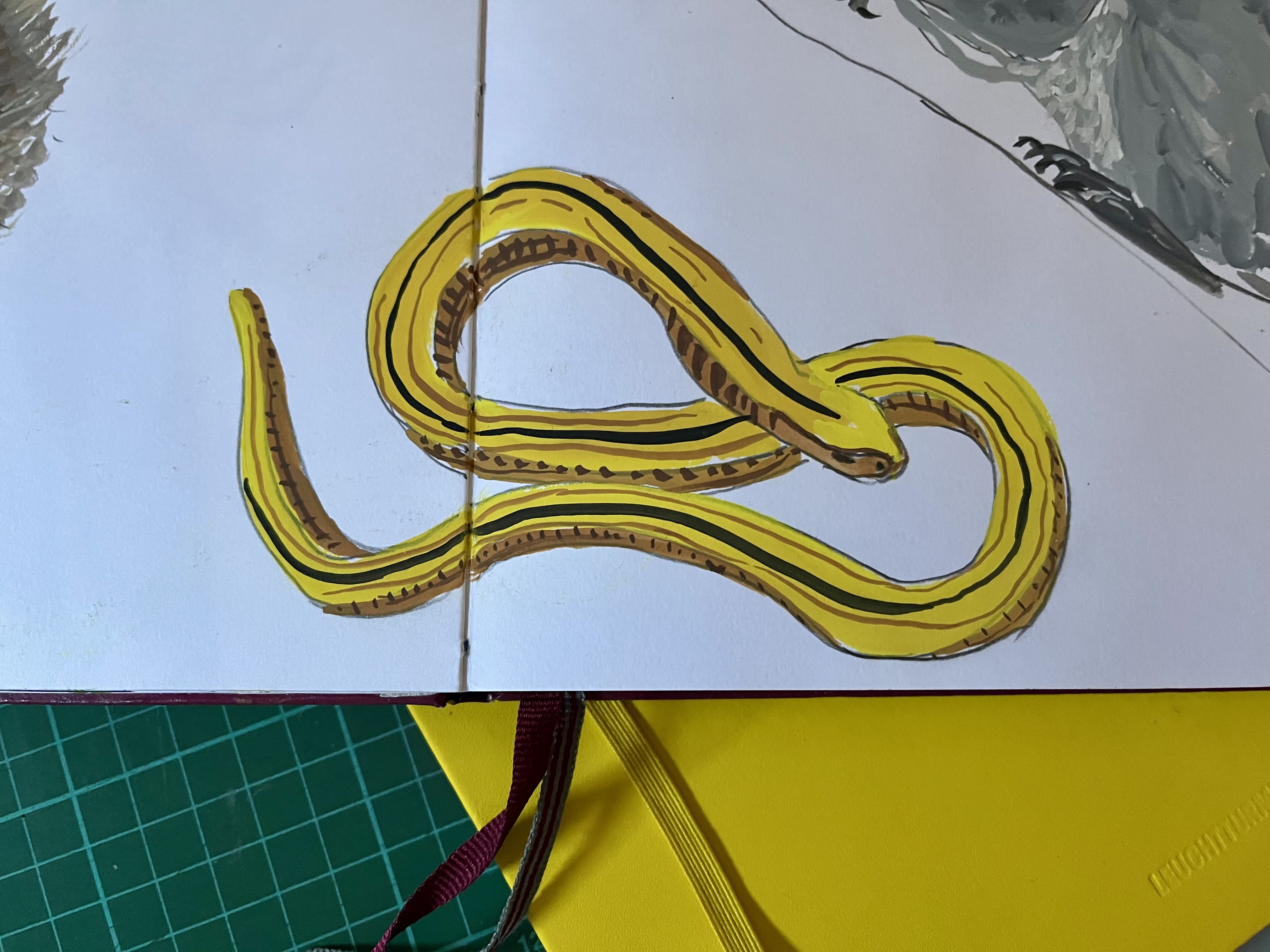
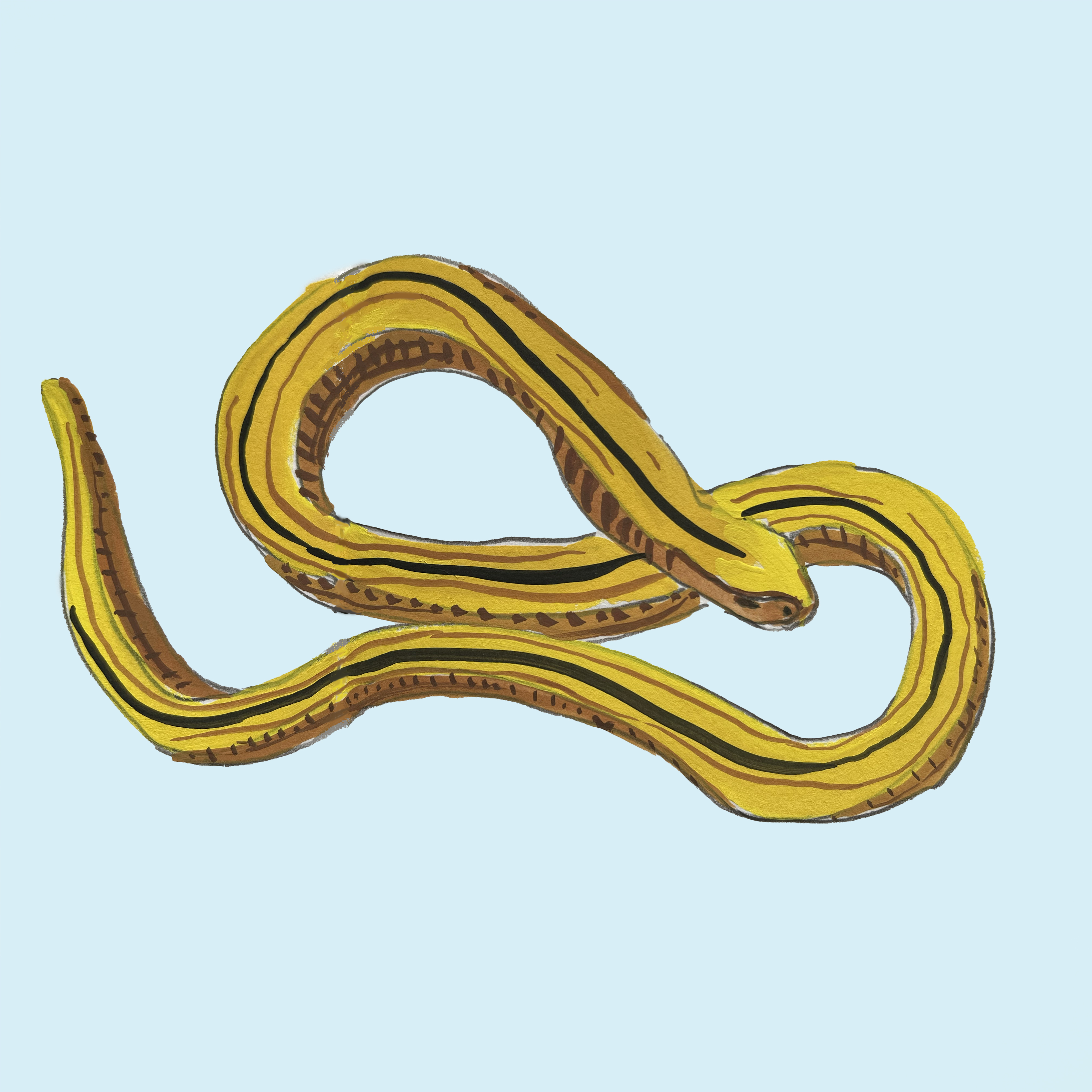
In case, like me, you’re a definitely in the sketchbook camp, Jackson’s Art have a sale on at the moment if you want to take a look.


for me i use my sketchbook when i’m feeling creative and want to make doodles or new designs. when i’m in the mood of sketching, then just a random blank sheet of paper works the best for me.
great read!!
LikeLiked by 1 person
Oh that’s interesting! thanks for reading!
LikeLike