
with the APWG and WLD
Apologies for the acronyms; I was worried the title would be longer than the post!
I attended an online Wild Life Drawing session in partnership with the African Pangolin Working Group, one of the first pangolin charities to not only rescue and rehabilitate these astonishing mammals, but also deal with law enforcement and the courts with – sorry, more trafficking I’m afraid – illegal trade. I won’t dwell on that aspect, not just because I find it heart-breaking but to be honest I muted the conversation when we got onto the more harrowing aspects of life with pangolins. One good thing, however, is that there are now almost 250 specialists working with charities and organisations, and awareness is increasing, and pressure is being put on the cultures that engage in the troubling traditional medicine practices which unfortunately impact these (and other) animals. It’s a tricky one isn’t it…we need to acknowledge and respect other ways of approaching health and long-held wisdom, and is it really any different to the myopia surrounding the continued use of fossil fuels and biodiversity loss here in the West? Hmm. Of course they are also dealing with habitat loss due to deforestation, road casualties and all the other problems the vast majority of our wildlife has to endure.
Anyway, let’s look at the only scaly mammal in the world which is so unique it has its own Order, Pholidota, with 8 species: 4 in Africa and 4 in Asia. They are all anteaters, and their scales are made of keratin, so from a medicinal point of view, consuming pangolin scales is the same as chewing your fingernails. Some are arboreal, others terrestrial, and they vary in size from about 1.5kg to 30kg. They have strong claws for digging termite mounds and anthills, and also making their underground homes.
They are an ancient animal, with ancestry dating back to the Cretaceous. Their burrowing habit and insectivorous diet may well have saved them from the after effects of the meteorite collision which famously finished off the dinosaurs. They are slow growing, and can live for 15-18 years, and only have 1 pup a year, making regenerating the population a difficult task.
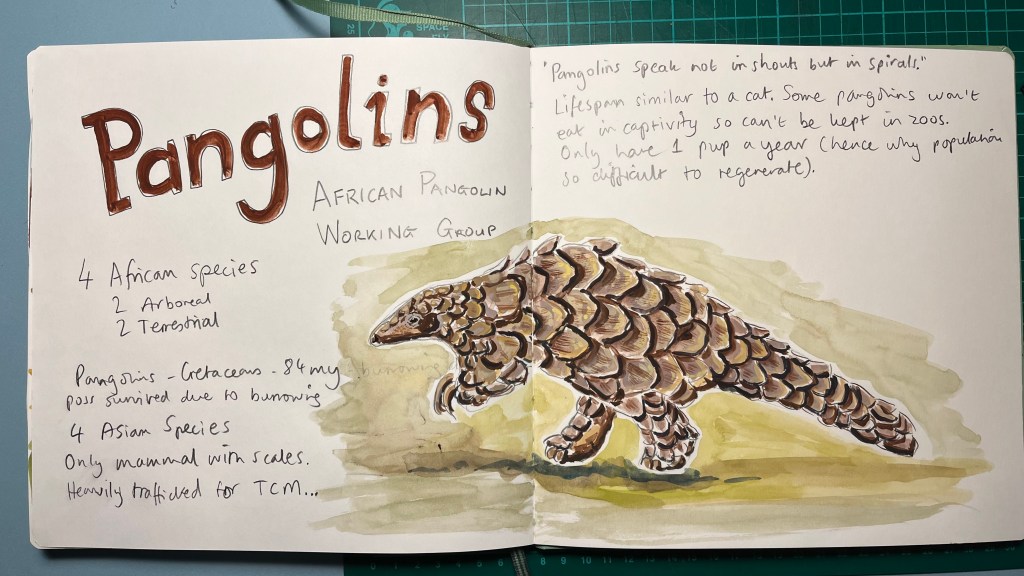
Here is my sketchbook painting of a Temminck’s or Ground Pangolin, copied from one of the reference images in the pack sent to us before the drawing session. There were over 60 of us on the zoom so the funds raised will go to help the APWG. The charity is leading the way in research on releasing the saved and seized pangolins back into the wild, and one of their stories was filmed for an acclaimed Netflix documentary, Kulu’s Journey, which brought the plight, and positive outcomes, of these animals to a wider audience.


I love Pangolins. Great to see more focus on them and drawing them is a great way to highlight their plight. Great illustration too. Encouraging to learn they are getting help.
LikeLiked by 1 person
Thanks Ma 🙂 yes it’s sad but at least there are lots of people helping them now.
LikeLike