with the Cornish Seal Sanctuary
and Wild Life Drawing
This was a livestream event, so we had the chance to properly meet the seals. Sometimes these sessions are using reference photos while we chat to an expert, and other times we link up with the organisation and watch the animals in real time. We get reference photos for both though, so we can either practise beforehand, or use one of the images to draw while watching the animals. Personally I like the challenge of drawing the animals live, but it’s great to have the photos to do some more concentrated studies.
Seals are remarkable creatures, and although they appear most similar to dogs – my Labrador looks like a seal when he puts his ears back – they are actually share a common ancestor with mustelids, so weasels and badgers and are more closely related to bears than canids. Pinnipeds have 3 separate families: the walrus is the only one left of its family, then there are the eared seals (sea lions and fur seals), and the true seals which are all the rest.
The Cornish Seal Sanctuary is part of the Sea Life Trust enabling the rescue, rehabilitation, and release of marine wildlife including Grey Seals and Puffins. They also work with the University of Exeter on research projects such as using GPS trackers on released pups. Some of the seals and birds are unable to be released, so remain at the centre to provide educational and ambassadorial functions to raise awareness and funds.
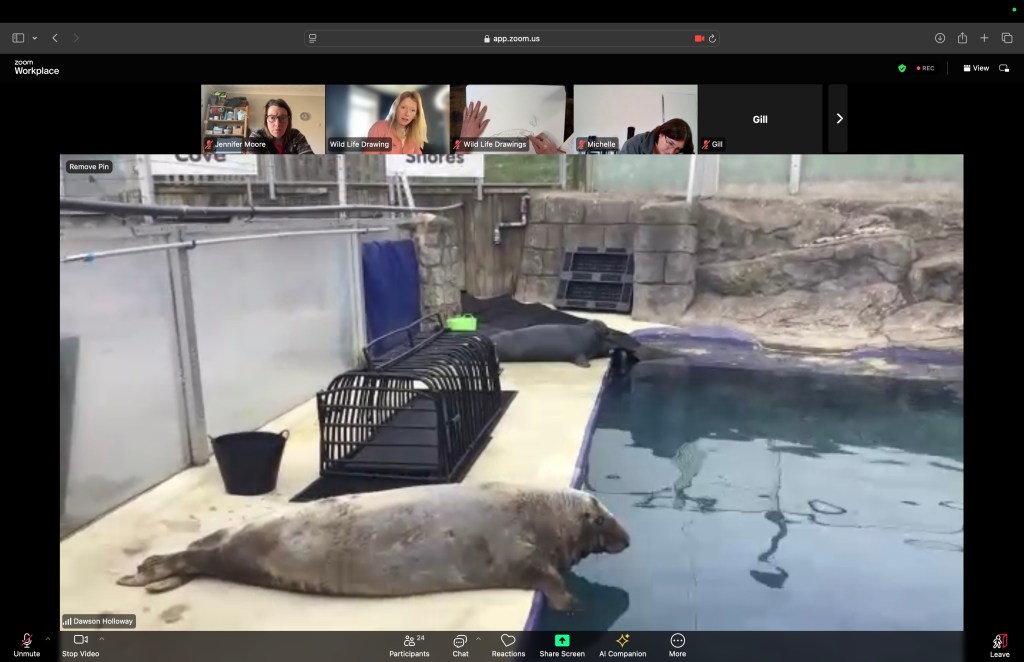
All the seals we met have real characters and various stories of their rescue, ranging from the bizarre to the harrowing. Thankfully they are fit and well now, and enjoy stimulation, plentiful food, and large tanks to keep them happy and healthy. Dawson, our host, was both passionate about his charges and full of interesting facts so between watching the seals, drawing, and listening about the biology and ecology of these accomplished predators, it was a lovely way to spend 90 minutes.
Here are my drawings:
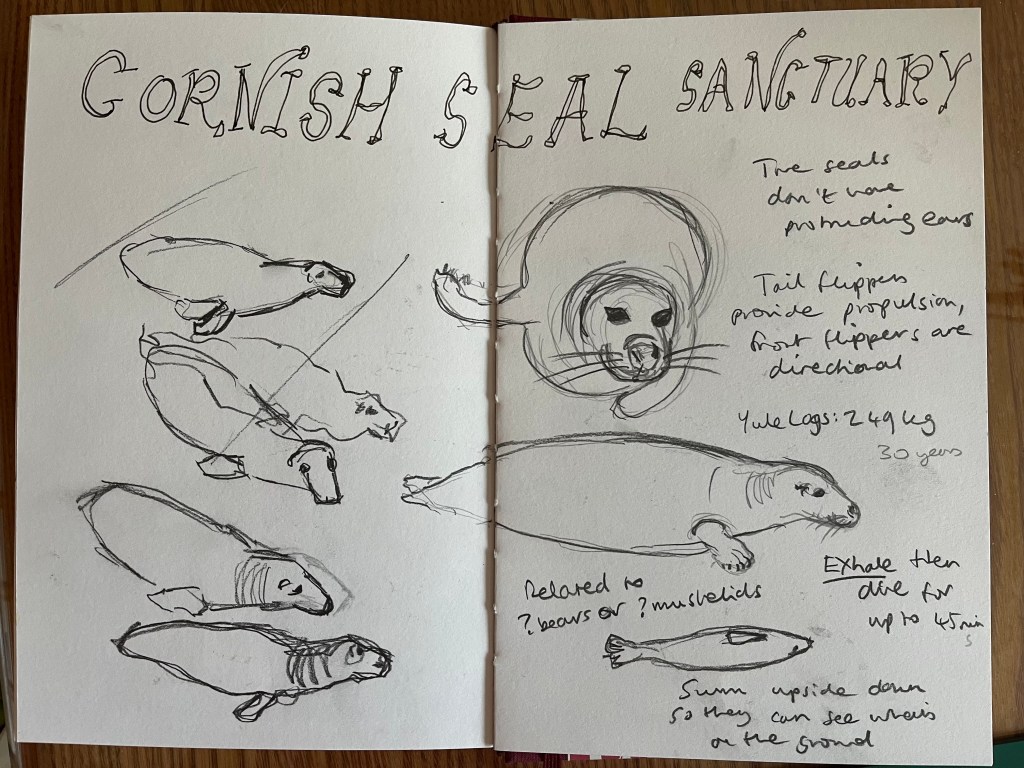

I found a diagram of a seal skeleton online which I printed out, as I was curious to see the anatomy of their front and back flippers.
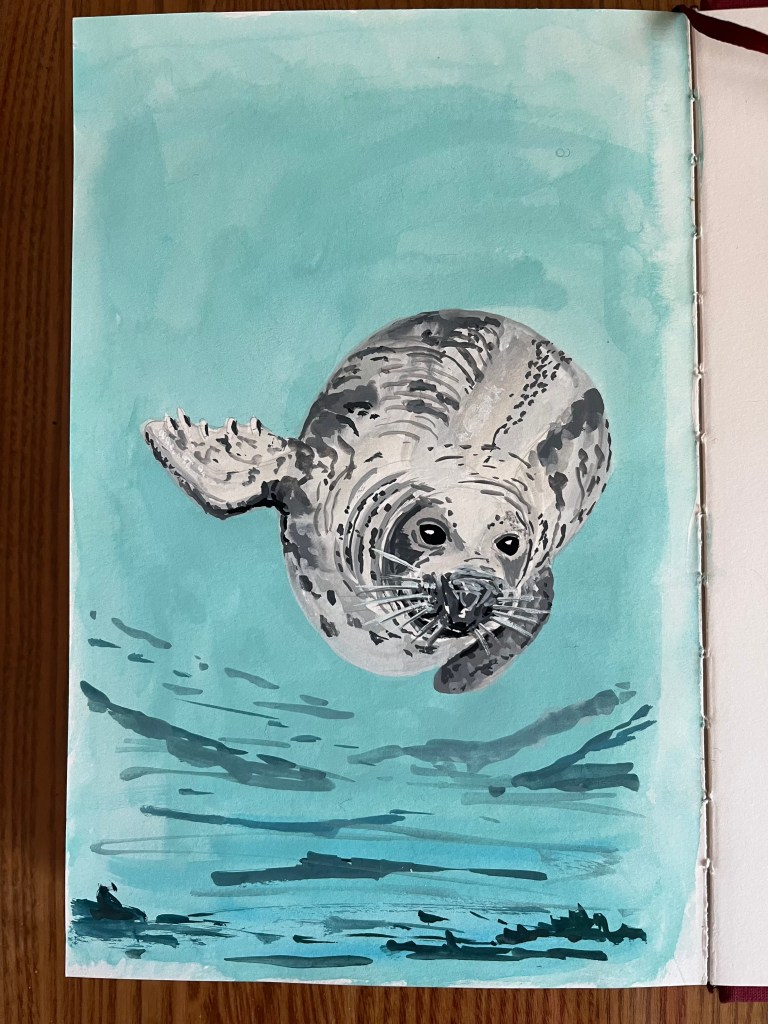
I tried a painting from one of the reference photos, but realised that attempting a foreshortened face was quite ambitious, and I overworked the gouache somewhat. I am getting better at tackling subjects I simply wouldn’t have considered though, so I am pleased with how it turned out.