
The weather is still awful here in Sussex (and much of the UK), with freezing temperatures and lots and lots of rain. I understand that February isn’t known for its balmy days and sunshine, but the relentlessness of the wintery downpours and biting wind is starting to drag. Early nesting birds must be struggling, and the annual migration of common toads, which usually takes place around now, is being severely delayed.
We have a number of toad crossings in this part of the county, and I signed up to volunteer with our local toad patrol having looked up on the Froglife website, and been in touch with the coordinator. There are 4 well-known crossings within a mile or two of me, but in spite of my enthusiasm for heading out in the dark with a bucket to transport toads over tarmac, there have been no sightings in the last week or two. Saturday might be good, as the thermometer should be showing it’s above the necessary 8°C that the toads prefer for travelling. These age-old migratory routes are used by hundreds of toads as they head out from their winter shelter in leaf litter and damp vegetation to their breeding pond (where they hatched) to start the next generation. Although thousands of toads laying millions of eggs might seem like more than enough to our human perspective, the tadpoles are at the base of the food chain, providing nutrition for a wide array of predators so few make it to adulthood. In addition, reproduction that relies on lots of genetic material being available does not fare well if this is reduced, especially when it’s not remotely associated with biological fitness, the usual route map for evolutionary development.
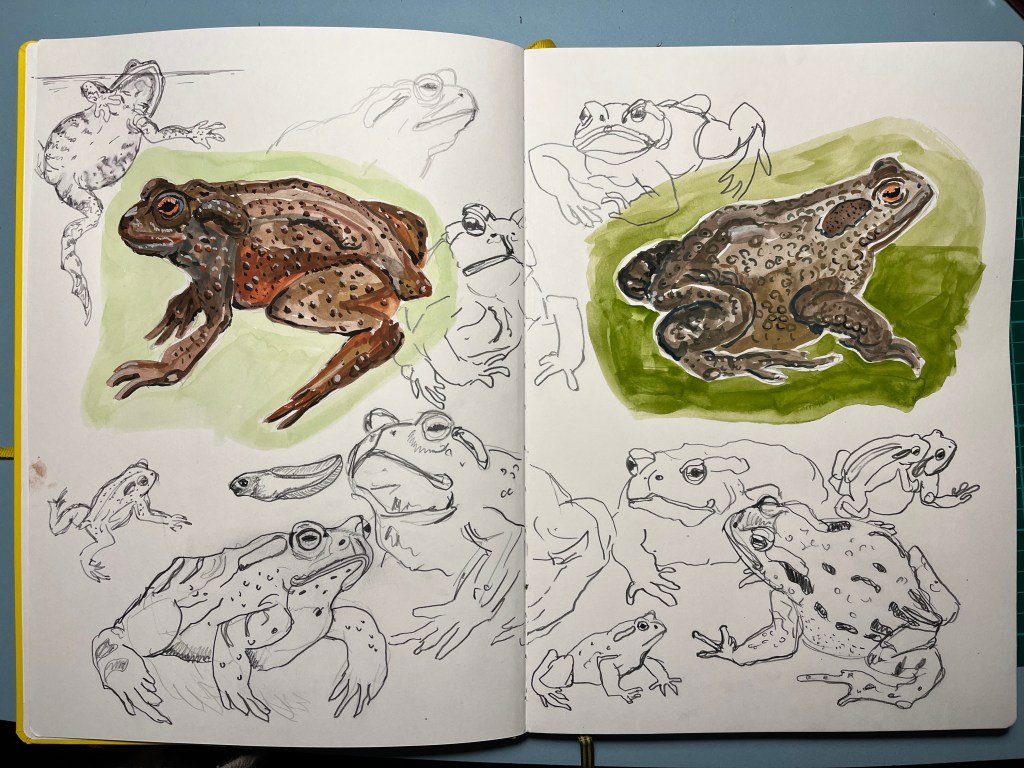
In the absence of helping toads, and the weather being too awful for anyone to go birdwatching, let alone buy a birdwatching logbook (yes, sales are still glacially slow) I have started my new A4 sketchbook, and celebrated the large format with some toad sketches. I just love their faces, and I never realised they had such long back toes.
Do you have a toad crossing near you?

