
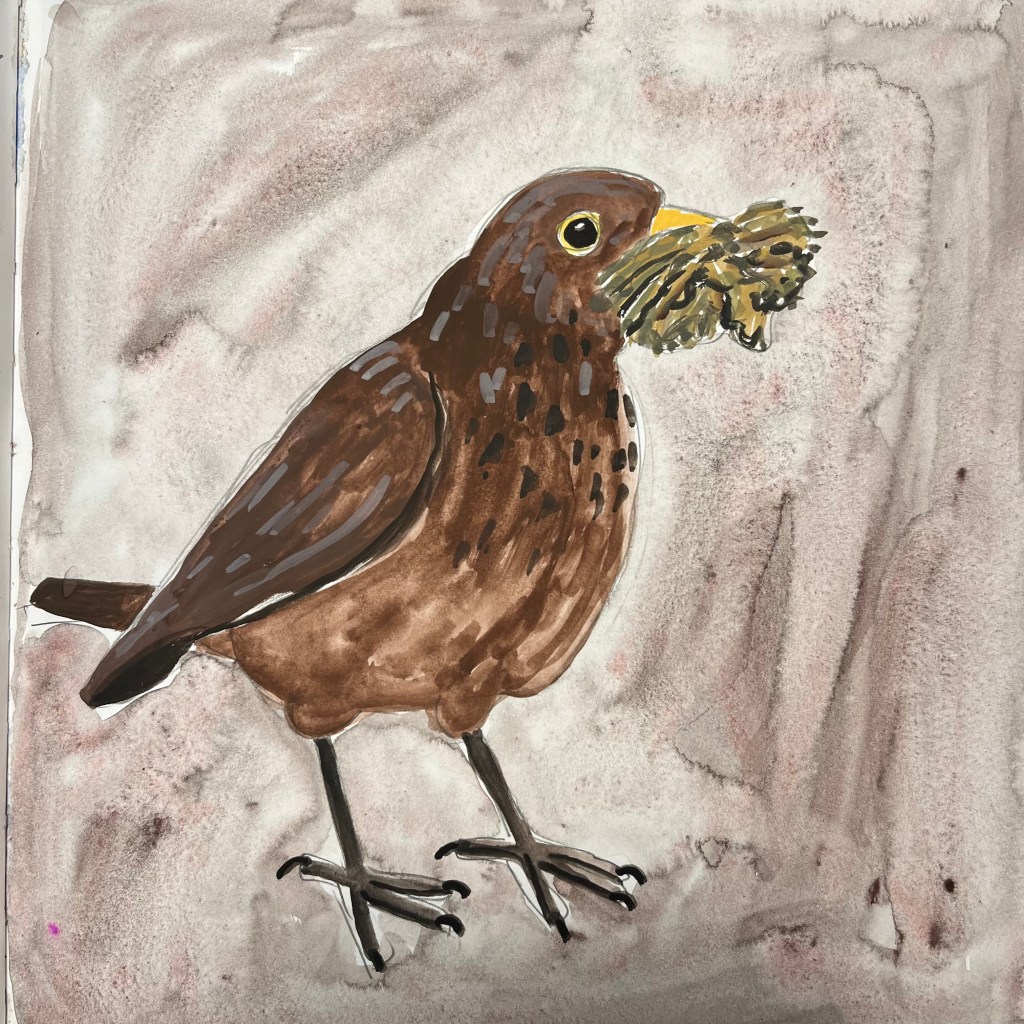
I was walking my dog yesterday when I saw a female Blackbird hopping along the side of the track with a huge beakful of daub, ready to take off and line her nest. While there’s no shortage of mud here in Sussex, it is still really cold and grey, so I hope this Blackbird pair have found somewhere sheltered and under cover so their brood doesn’t get chilled. I have been shaking out my guinea pigs’ bedding onto the front lawn, and there are now hundreds of worm casts. I noticed last year that there were very few worms, and that the drainage was terrible, so I have made sure to mulch the grass with the bedding and it seems to be working. Chicks can’t drink so get all their moisture from their food, and worms are perfect. There are also lots of long stems of hay which the birds can use to weave their nests, now that rough grassland is thin on the ground.
The romantic origins of St Valentine’s Day come from observing birds pairing up and making their nests, so it’s a good time to consider how to make our gardens and outdoor spaces as beneficial as we can for our garden birds. Of course, there are nest boxes available, but for many species, they need cover and shrubbery to protect them so don’t tend to use the exposed nest boxes we tend to see nailed to fence posts and garden walls. Blue and Great Tits will happily use them – as will wasps, tree bumblebees and hornets – so trying to create bushy enclosed areas within shrubs and wild areas can help those birds who need more security.
As for bedding, the most popular thing we have found is the wool innards from insulated packaging. I have a regular Abel & Cole order, and the refrigerated items come with this insulation, and I tend to sacrifice one or two so that the birds can use the loose felt for their nests; the plastic casing can be recycled. The Jackdaws love it, and take great lumps off to stuff in their chimney nests of the cottages behind our house. It’s best not to use pet hair as topical and systemic flea and tick treatments can cause chick mortality, and never ever ever put out human hair. I kept poultry at my last house, and I always used to laugh watching the wild birds trying to wrestle the moulted chicken feathers, and they would always look in the duck pen first for the small breast feathers preened out by my calls.
Needless to say, cats and dogs should be deterred from investigating any nesting birds. This means keeping dogs on leads from March to July in open country (it’s the law!) although really dogs rummaging through the undergrowth anywhere is unhelpful during this sensitive time. Cats should be kept inside anyway which is not the standard practice here in the UK, but keeping them in at night at least can significantly reduce nest-raiding.
In summary
- keep shrubby areas undisturbed
- don’t cut long grasses and stems
- encourage worms in your lawn and borders
- put out natural nesting material such as wool, hay, and soft feathers
- provide natural cavities and sheltered spots for nesting
- prevent interference from dogs and cats
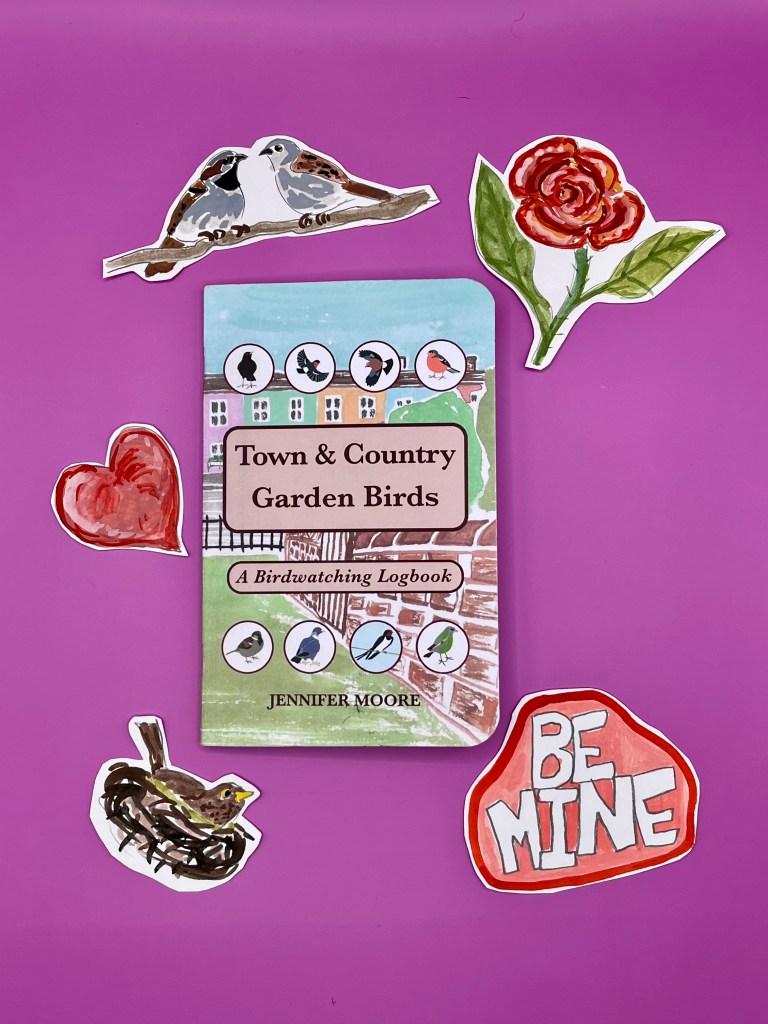
And of course, if you want to observe and record the birds nesting in and around your garden, how about using one of my birdwatching logbooks?

