
Should we feed our birds?
I have mentioned this topic before but I felt it was a good idea to revisit the conundrum, especially as the weather is milder here in Sussex, and thoughts of spring and gardening are definitely creeping into my mind. In addition, we are approaching the RSPB’s Big Garden Birdwatch weekend, where there is much encouragement to set up feeders in order to encourage different species to our gardens.
Bird food is big business
We Brits spend about £250m on bird food each year, and that figure doesn’t include the cost of the feeders (in all their myriad forms) themselves. Sadly, much of it is produced using farming techniques which are detrimental to birds, and the shipping of exotic foods such peanuts and niger seed as well as the cheaper grains has a negative impact on all sorts of wildlife. Then there’s the plastic packaging, and that’s before we get onto the disease issues of feeding birds in the same spot. Nutritionally, peanuts, suet, mealworms, sunflower seeds and wheat do not form a well-balanced diet for wild birds, and just as with us humans, we need a variety of foods to keep us healthy and – vitally – support our gut bacteria, and this is the same for birds (and pretty much everything else too).
Engagement with nature
Feeding the birds however, gives many people a window onto nature that otherwise would be difficult for them to access. Installing bird feeders at nature reserves, hospices, schools, and other areas where observers can see a congregation of different species is a spectacle that all of us enjoy. Farmers who scatter supplementary feed along field margins report huge increases in overwintering species that would struggle without this help.
A middle ground
As with everything, balance is key. Of course, having a bird feeder up is a lovely way to attract wildlife into your garden, but are there other, more natural things that will feed the birds, without causing these disease and nutritional issues.
Consider a wildlife-friendly garden with any or all of the following:
- seedheads
- leaf litter
- cracks and crevices for small invertebrates to hide
- berried shrubs
- compost heap
- fruit tree buds
- healthy soil
Even a small area with all these elements will provide a rich hunting ground for many different types of bird, with all the benefits of fresh, appropriate food as well as stimulating natural behaviours. Sure, pop up a few well-spaced, feeders with some locally-produced high-quality bird food and ensure to clean them regularly, but keep in mind the wider advantages of scrubby areas, leaf piles, worms, woodlice etc, and learn to enjoy watching the birds using all parts of your outdoor space. In our garden, we have Wrens going through the dormant pot plants, and Robins in the borders looking for worms. Blackbirds enjoy the pyracantha, and Great Tits pick off little invertebrates from the trailing stems of the hop.
Here’s a sketchbook spread I made:
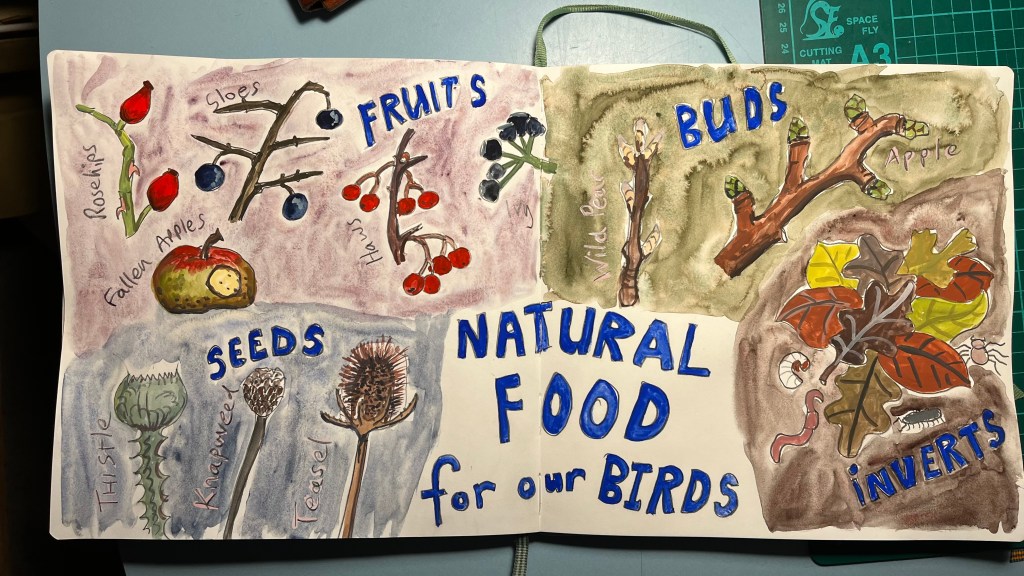
Special mention about slugs and snails which are essential within the ecosystem for recycling decaying plant matter as well a being protein-rich snack for Blackbirds and Song Thrushes (and frogs, toads, and hedgehogs). The same goes for overwintering caterpillars and plant bug larvae. Seeing the Blue Tits scanning the twigs and branches for small morsels is providing a garden service that can’t be achieved if they are feeding on imported peanuts.
What do you think? Do you feed your garden birds?

