Today I’m going to be discussing leaves. Leaving leaves, more to the point.
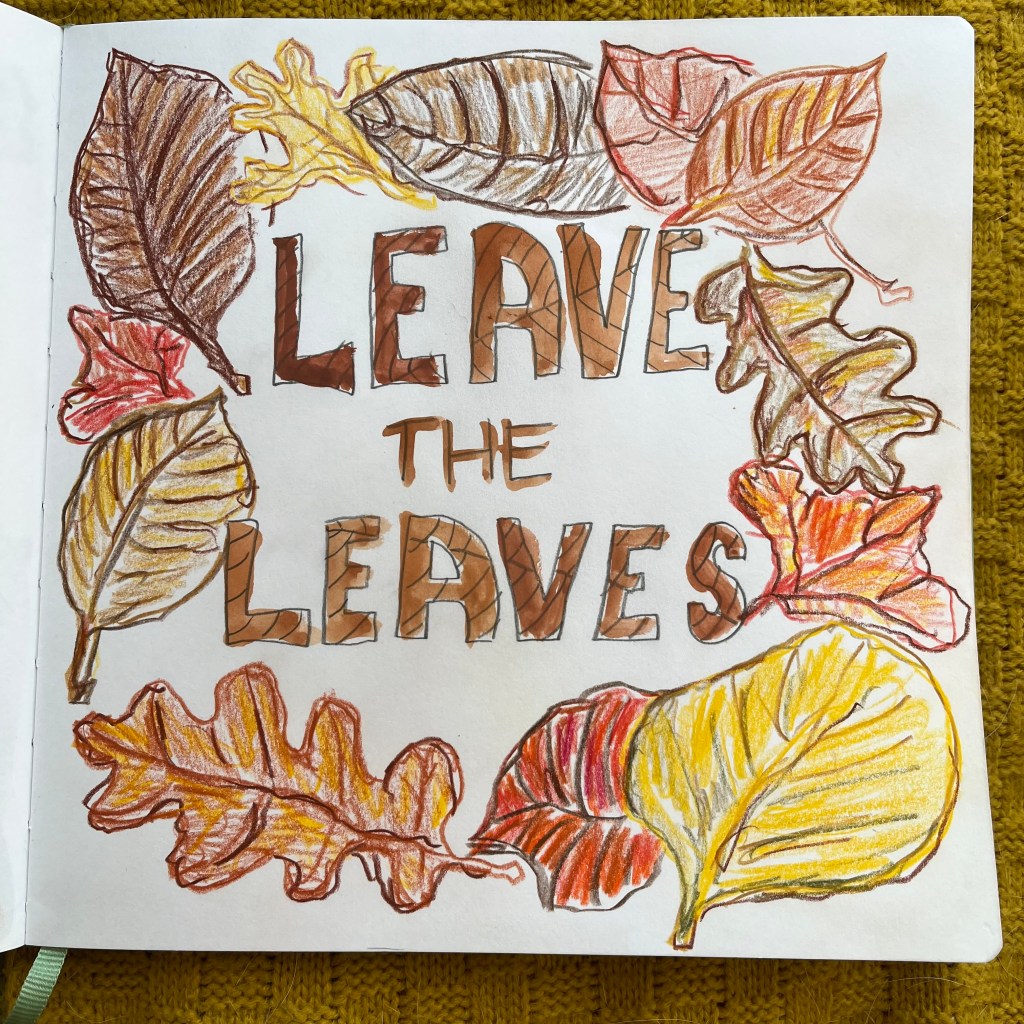
I listened to a VIP (Very Interesting Podcast) yesterday evening by In Defense of Plants which was all about the value of leaving leaves, and how October is Leave the Leaves month. The guest was David Mizejewski who spoke eloquently and entertainingly about wildlife gardening, and how important it is to leave the leaves where they fall. This is not just so that the nutrients can be recycled by the trees from whence they came, but because the damp, insulating cover of a blanket of leaves is the perfect overwintering habitat for numerous invertebrates, including the larval or pupal forms of many of our favourite butterflies and moths. Picking through these leaves allow thrushes, woodpeckers and other insectivorous birds, as well as reptiles and amphibians to sustain themselves through the winter. Yes, people worry about slugs and snails raiding the vegetable patch, but if you cultivate a functioning ecosystem, they are naturally balanced with predators (and on the subject of slugs and snails, bear in mind many of them are primarily detritivores and feed on dead plant matter).
It struck me that all these leaves would have been utilised much more effectively in the past, as in before human intervention. Many animals use leaves to line their winter nests, thus taking the nutrients down underground or into tree cavities. The gentle disturbance of boar, badgers and deer rooting around would have naturally distributed the leaves out into the environment, enriching the wider landscape. The same goes for the prodigious numbers of tree seeds during a mast year: they would have served to feed a huge variety of birds and animals, whereas now they sit rather forlornly on the tarmac, or clog up the storm drains when we get a downpour.
It is important to maintain our managed landscapes of course, and these days, wet leaves can be a hazard, and without the full complement of decomposers in our gardens, our lawns can suffer and start to look sorry for themselves. However, I would suggest that an afternoon of gentle raking (rather than vacuuming or blowing) and then mulching the borders, or adding them to the compost, or donating this autumn bounty to a neighbour who is a keen gardener is by far a better use than either putting them in the bin or worse, burning them.
Here is my coloured pencil sketch in homage to Leaving the Leaves…