
inspired by RHS Chelsea Flower Show
Bees bees bees. There’s so many resources for encouraging bees into your garden, yet with birds, it’s invariably about putting up feeders and nest boxes. Occasionally there’s a nod towards teasels, sunflowers, and other seedheads for finches, but there’s not much about providing natural foodstuffs and other benefits specifically for birds.
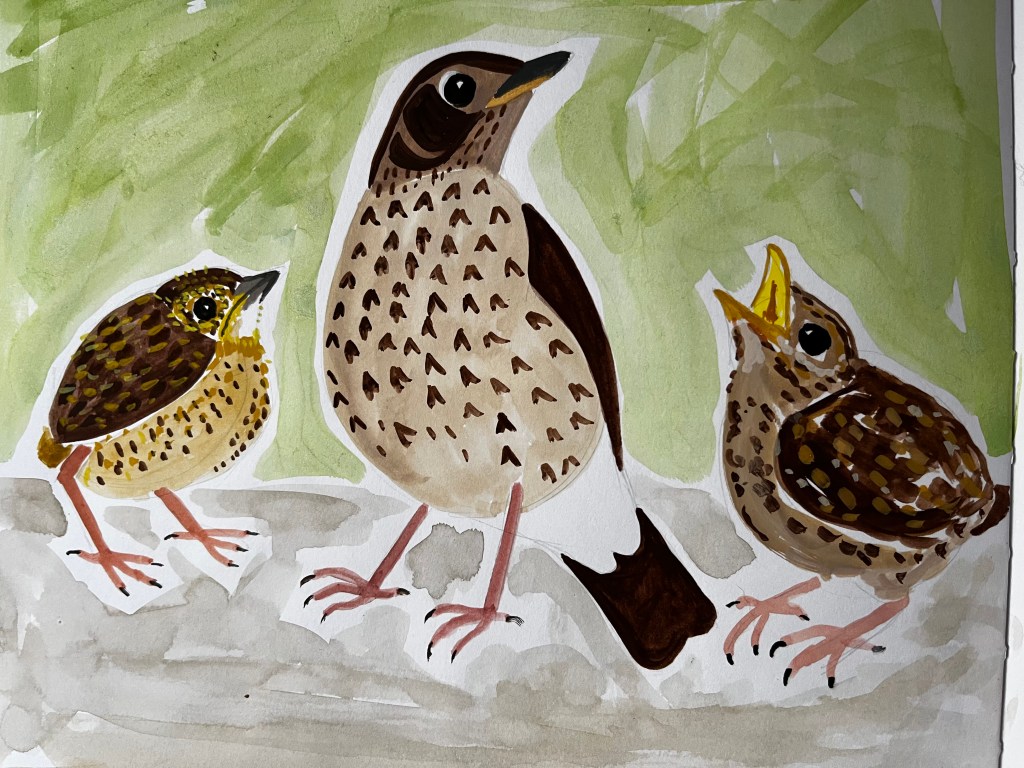
I was encouraged to see the Songbird Survival Garden this year at Chelsea, although I don’t feel it’s had the coverage, or the wider impact that it – and certainly the thinking behind it – deserves.
In my birdwatching logbooks I’m always keen to draw attention to bird behaviour beyond that of what we might see them making of our offerings. I always mention their nesting and feeding choices that are not designated for them by us, and our gardens are full of potential without the need for expensive bird food nor bird boxes.
Insects and other invertebrates are relatively easy to cater for, and thankfully many birds are insectivorous and will consume these meaning that by definition, a garden that encourages any wildlife will also encourage birds. There are some things, however, which can be taken into consideration which will ensure our avian friends are included. Here are the main things that stuck out for me.
a point of view
Birds need to inspect their surroundings for predators before heading onto a feeding station, and if their vantage point can be a prickly plant to deter cats, so much the better. We have a large pyracantha growing up our fence which this year is laden with flowers (later, berries) and therefore provides a great spot to survey the garden. I have hung an old teapot on the trellis as a possible nesting space within its ferocious spikes:

slugs and snails
A tricky one this, as most people do their best to remove these from the garden! Firstly, bear in mind that the large slugs are mostly detritivores so eat dead plant material; it’s the small grey slugs which tend to go for our vegetables. Personally I provide some sacrificial kale for the slugs, and grow extra sunflowers (I only seem to have about a 20% success rate!) and this year I want to properly harvest and dry the seedheads so I can feed them back to the birds.
dandelions and other asteraceae
Dandelions, sow-thistle, or my favourite, jack-go-to-bed-at-noon (Tragopogon pratensis which creates a tennis-ball-sized seedhead) are wonderful for both pollinators and then birds, and, if you’re anything like me, are an opportunity to marvel at the natural architecture of that perfect orb of delicate feathery seeds.
How are you helping birds in your garden?

